Compare AI vets and tele-vets to find the best option for your pet's health needs. Learn when to use each service and which provides faster, more accessible care.

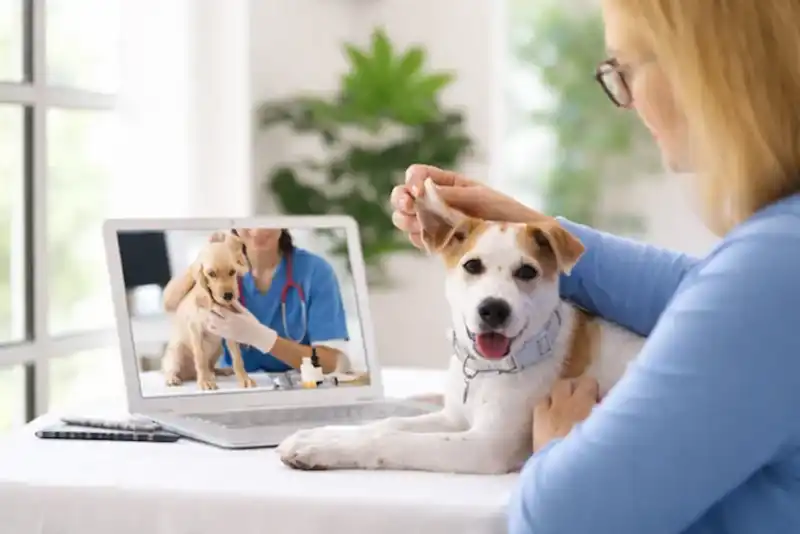
As pet care increasingly moves online, many pet owners are asking the same question: Is an AI vet better than a tele-vet? Both options promise faster access to pet health guidance without an immediate in-person visit, but they serve very different purposes.
An AI vet is an artificial intelligence-powered pet health assistant designed to provide instant, informational guidance for common pet health questions. AI vet tools analyze user-provided inputs such as symptoms, behaviors, diet, medications, and health history to generate context-aware responses.
Unlike traditional veterinary services, AI vets:
A leading example of this category is PerkyPet AI, which combines real-time answers with long-term pet health tracking to deliver increasingly personalized guidance.
A tele-vet is a licensed veterinarian or veterinary professional who provides care remotely via video calls, phone calls, or chat platforms. Tele-vet services function similarly to telemedicine for humans.
Tele-vet platforms typically:
Tele-vets are designed to replicate traditional veterinary interactions in a remote setting.
AI vets are best suited for non-emergency, everyday pet health concerns, which account for the majority of pet owner questions.
AI vets excel because they deliver immediate clarity. There is no scheduling, waiting, or pressure to escalate unnecessarily.
Platforms like PerkyPet AI go further by storing each pet's health history, allowing the system to recognize patterns, track changes over time, and provide guidance that evolves with the pet.
Key advantage:
AI vets reduce anxiety and unnecessary vet visits by helping owners make informed decisions quickly.
Tele-vets are most useful when a pet owner already knows professional input is needed but an in-person visit is not required.
Tele-vets provide reassurance through direct interaction with a licensed professional. However, the experience is still constrained by time, availability, and cost.
Key limitation:
Tele-vets are reactive and session-based. They do not scale well for frequent or ongoing questions.
One of the most important differences between AI vets and tele-vets is context retention.
Tele-vet sessions are typically isolated interactions. Once the call ends, context is lost unless the owner manually tracks everything.
AI vets, by contrast, can:
This makes AI vets particularly valuable for:
Over time, AI vets deliver more accurate and relevant guidance because they understand the full picture of a pet's health - not just a snapshot.
When evaluating AI vet tools and tele-vet services, cost and accessibility are often the factors that most influence which option a pet owner chooses. Understanding how each model works financially - including both visible costs and hidden costs - is essential for making informed decisions.
AI vet platforms are built to be broadly accessible and affordable. They often include:
Practical Advantage: Owners can ask multiple questions across time without additional cost penalties.
Best Choice for: Owners with frequent questions, non-urgent concerns, or those wanting ongoing guidance without recurring per-visit fees.
Best Choice Recommendation: PerkyPet AI
Tele-vet services involve licensed veterinary professionals and therefore have pricing models similar to traditional care:
Practical Limitation: Costs can scale quickly if multiple interactions are needed.
Best Choice for: Owners who want professional interpretation or case confirmation after initial triage.
Best Choice Recommendation: Vetster
While both AI vets and tele-vet services significantly improve access to pet health guidance, it is critical to understand their limitations. Neither option is designed to replace hands-on veterinary care, physical examinations, diagnostic testing, or emergency treatment.
AI vets and tele-vets are best viewed as decision-support and guidance tools, not as substitutes for in-person medical intervention. They excel at helping pet owners understand symptoms, assess urgency, and make informed next-step decisions - but they cannot physically examine an animal, perform diagnostic imaging, run laboratory tests, or administer treatment.
Regardless of whether an owner uses an AI vet or a tele-vet, certain scenarios should never be handled remotely. These include:
In these cases, time-sensitive, hands-on care is critical, and any delay caused by relying on digital tools can increase risk.
AI vets are limited to the information a user provides. They cannot:
Even highly advanced AI systems cannot replicate the diagnostic value of a trained veterinarian physically examining an animal. Their role is to interpret information, not to gather it firsthand.
An AI vet provides instant, automated guidance based on data and patterns, while a tele-vet involves speaking directly with a licensed veterinarian via video or chat.
AI vets are highly effective for non-emergency guidance and decision support. Accuracy improves significantly when the AI has access to a pet's health history. Tele-vets provide professional opinions but are limited to the information shared during the session.
In some regions and cases, tele-vets may prescribe medications, but regulations vary by location and condition.
Yes. Many pet owners use AI vets first to determine whether a tele-vet or in-person visit is necessary.
AI vets are safe when used appropriately for education, guidance, and triage - not emergencies.
AI vets are significantly faster. They provide instant responses, while tele-vets typically require scheduling or waiting for availability.
No. AI vets do not prescribe medication. Their role is to provide guidance, education, and decision support.
For everyday pet health questions, an AI vet is the better option. For known issues requiring professional interpretation, a tele-vet is appropriate.
The most effective approach is not choosing one over the other, but using them in the correct order. AI vets provide clarity, speed, and context. Tele-vets provide professional confirmation when needed.
Platforms like PerkyPet AI represent the next evolution of pet health support - always available, increasingly personalized, and designed around how pet owners actually seek guidance.